Indianapolis Event Work: Plan Beyond the Busy Weekend
Plan an Indianapolis monthly furnished stay around event work, with storage, recovery time, parking permission, and extensions beyond a single busy weekend.
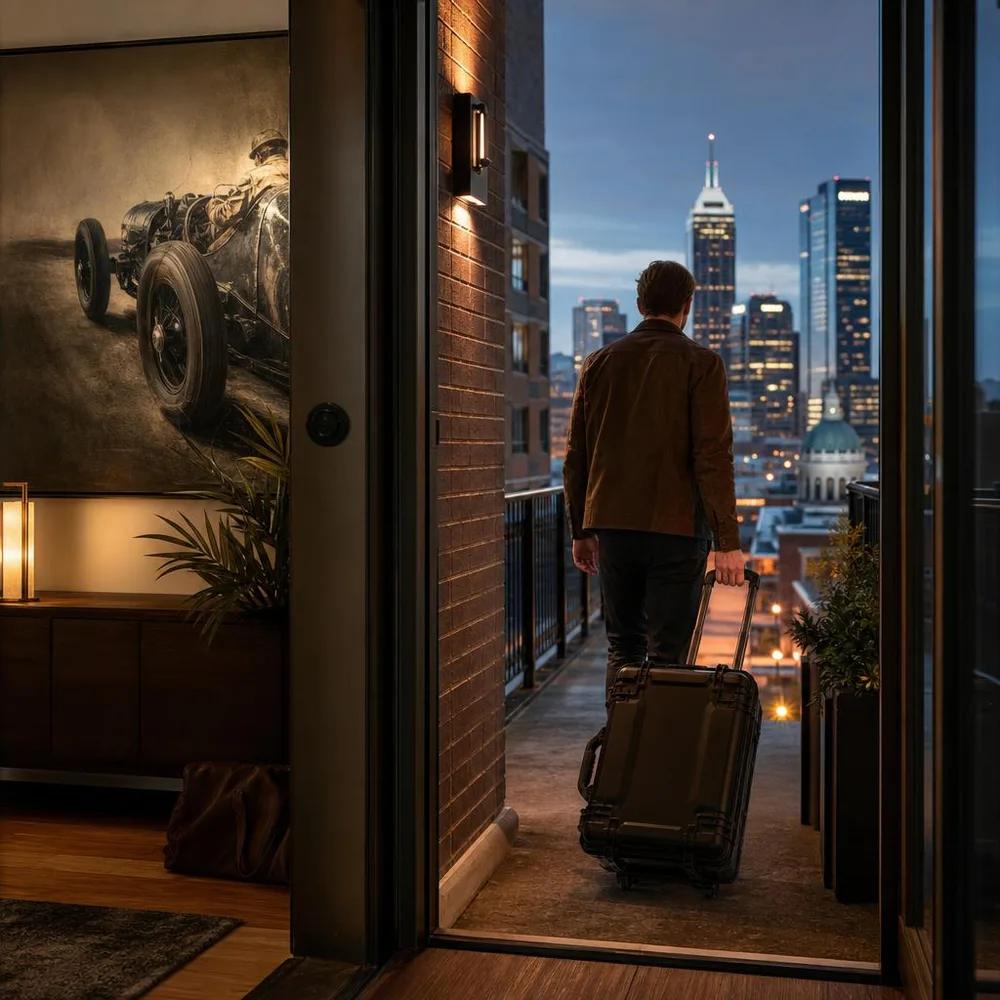
A one-week event assignment in Indianapolis can look simple on paper and become complicated once the gear, the schedule, and the recovery time are real. If your work is tied to a convention, sports production, trade show, touring performance, or another citywide event, the lodging question is not just where to sleep after the shift. It is whether the place supports loading equipment, leaving cases somewhere secure, getting a quiet hour before the next call time, and extending your stay when the job stretches past the original plan. That is where a calendar-month furnished rental can make more sense than a short-stay hotel, especially when the assignment starts midweek, crosses a month boundary, or keeps changing by a few days.
When a busy weekend becomes a month of work
Indianapolis can draw event crews for a compact burst of activity or for a longer run that includes setup, live days, strike, troubleshooting, and post-event wrap. Those are very different lodging needs. A short stay is often enough when you only need a bed between call times and you are traveling light. A month of work is different because the assignment may require rest days, laundry, gear storage, a place to review notes, and a realistic path to extend the agreement if the client adds rehearsal days or another venue move. is meant for calendar-month or longer furnished stays, not nightly bookings, so the right question is whether your actual assignment timeline supports a written month-based arrangement rather than a few hotel nights stitched together.
 is meant for calendar-month or longer furnished stays, not nightly bookings, so the right question is whether your actual assignment timeline supports a written month-based arrangement rather than a few hotel nights stitched together.
That distinction matters in Indianapolis because event work often clusters around specific districts and venues, but your best lodging choice depends less on the headline event and more on the structure of the job. If you need to arrive before equipment check-in, remain available for teardown, and keep your bagged or cased gear nearby without reloading it every morning, a month stay may reduce friction. If you are only in town for a single performance or a two-night activation, a furnished monthly rental may be more space than you need. The right fit comes from matching the lodging term to the real work term, not from assuming any event automatically means a hotel is better.
The Indianapolis geography that actually affects the stay
For event workers, Indianapolis geography is practical before it is scenic. Downtown, the Mile Square, the near-north side, the Wholesale District, and the areas around major venues can offer shorter movement between lodging and work, but those areas can also be busier at the exact hours you need to load in or sleep. Areas just outside the center may give you easier parking and more room for equipment, but that can mean a longer routine when you are carrying cases, staging uniforms, or coordinating with a rideshare after a late call time. The real tradeoff is not city versus suburb in the abstract; it is whether you want immediate access to the venue core or a calmer place to recover between shifts.
You may also want to think about access patterns rather than only mileage. A furnished stay near major routes can help if your work rotates among different sites during the month. A quieter residential block can be better if your schedule includes early starts and late returns. If you expect to move in with rolling cases, protective packaging, or photo or audio equipment, ask in advance whether the entry path, elevator, and parking arrangement are realistic for repeated trips. A property near Indianapolis attractions may be convenient on paper, but a useful month stay is one that works at 6 a.m. after a long day, not only when the streets are empty.
Equipment storage is part of the lodging decision
Event crews often underestimate how much room they need once the workday ends. A hotel room can hold a suitcase, a garment bag, and maybe one case if you are lucky. A month stay may need safe space for multiple equipment cases, chargers, backups, bins, and anything that should not be left in a vehicle overnight. That does not mean every furnished rental has the right storage layout. It means you should ask precise questions before you commit to dates. Is there a closet large enough for cases? Is there a locked room or a secure interior area? Can the property handle repeated in-and-out movement without disturbing neighbors or damaging finishes? Those questions are about working life, not luxury.
They also connect directly to the difference between short-stay lodging and a monthly agreement. In a nightly setup, you may be expected to unpack and repack daily. In a calendar-month stay, you are usually looking for a base that lets you leave some items in place while you cycle through event days, rest days, and administrative tasks. If your assignment includes rental equipment or sensitive materials, you may need a written understanding about what may stay on site and where it should be stored. Do not assume every furnished property is set up for that. Ask before arrival whether the landlord or property provider is comfortable with the volume and type of gear you plan to keep in the unit.
Quiet recovery time is not a luxury for event work
One of the most overlooked benefits of a month-long furnished stay is the chance to recover in a predictable setting. Event schedules can run long, and the hours before the next setup often matter as much as the work itself. A quiet space with a real table, a couch, or just enough separation between sleeping and working can help you prepare without the noise and turnover of a transient hotel corridor. If your role requires calls, editing, client emails, or gear prep, recovery time and working time may overlap. A monthly stay makes that overlap easier to manage, but only if the unit is actually set up for it.
Consider what kind of quiet you need. Do you need a place where the bedroom is separate from the main room? Do you need blackout coverage or simply fewer hallway interruptions? Can you sleep through downtown activity, or do you need a residential block with less late-night traffic? These are not abstract preferences. They shape whether you arrive rested enough to do the next shift safely and professionally. If the assignment runs beyond the original weekend, quiet recovery becomes even more important because fatigue compounds after the first few nights.
Parking permission, loading access, and what to confirm early
Parking can look like a minor detail until the first load-in. In Indianapolis, event work often means arriving with cases, staying late, or making multiple trips in the same day. A month stay should account for parking permission, loading access, and any building rules that affect repeated arrivals. If the property has a garage, alley access, assigned space, guest restriction, or key fob system, verify that these details fit your schedule. If you are using a larger vehicle or need frequent unloading, do not wait until move-in day to discover the setup is awkward.
Useful questions to ask before you agree to dates:
- Is there a designated place to park, unload, and temporarily stage equipment without blocking neighbors or building access?
- Are there written rules about commercial vehicles, repeated loading, or after-hours arrival that could affect an event schedule?
- If the assignment expands, what notice is needed for a date extension, and can the same furnished unit stay available?
- Is the unit quiet enough for sleep and remote admin work, or will noise make recovery difficult after long event days?
- Is there enough indoor space to keep cases, props, or technical gear out of the way without crowding living space?
A hypothetical household example
For example, a hypothetical lighting technician arrives in Indianapolis for a six-day arena assignment that is later extended by nine more days for an added rehearsal and a second event weekend. The first plan was to use a hotel because the initial schedule sounded brief. Once the work adds gear staging, early morning call times, and a need to leave cable cases in one place, the hotel becomes less practical. A calendar-month furnished rental gives the technician a base for sleeping, sorting equipment, and doing quick repairs. But the technician still has to confirm parking permission, ask whether the unit can handle stored cases, and make sure the written agreement allows a date extension if the client changes the end date again.
In that example, the best answer is not automatically a monthly rental or automatically a hotel. It depends on whether the job is truly a one-off weekend or whether the event is really a month-long workflow with uneven hours and uncertain endpoints. The value of a monthly stay comes from the ability to live around the assignment instead of around hotel checkout times.
A decision framework for booking the right length
Use this simple framework before you search on :
- Step 1: Define the actual work window. Separate setup, live dates, strike, and any likely extension days. If the end date is uncertain, treat that uncertainty as part of the decision, not a minor detail.
- Step 2: Identify what must stay on site. List the cases, uniforms, tools, or supplies that need indoor storage and decide whether a hotel can truly handle them.
- Step 3: Decide how much quiet you need. If sleep and admin work are both important, favor a unit that supports both instead of one that only solves the sleeping problem.
- Step 4: Check parking and access. If you will arrive late, load repeatedly, or move equipment often, the property’s access rules matter as much as the furniture.
- Step 5: Compare the cost of friction, not just the nightly rate. A shorter stay can look easier, but repeated re-check-ins, storage problems, or poor rest can create their own practical costs.
If the framework points to a calendar-month stay, the next question is whether the property provider can support the timeline in writing. If the assignment is only a few nights, a short-stay hotel comparison may still be the better fit. The key is not to overbuild your lodging for a brief job or underbuild it for a long one.
Arrival and agreement checklist for Indianapolis event stays
Before you arrive, confirm the terms that matter most for a month of event work. Use this checklist as part of the agreement process, especially if your schedule is tied to shifting venue calls or multiple event days. You can also use list your place if you are a property owner who wants to present a furnished space to monthly renters who need a work-ready base.
- Exact start and end dates are written down, including whether a February stay runs for the full calendar month or another agreed period.
- Any extension process is clear, including who to contact and how much notice is needed if the event adds days.
- Parking permission is confirmed in writing, including whether a vehicle can remain on site and whether repeated loading is allowed.
- Equipment storage expectations are discussed before arrival, including where cases or work items may be kept indoors.
- Quiet hours, access instructions, and any building rules that could affect recovery time or early departures are understood before move-in.
- If the assignment changes, both sides know how the agreement is updated rather than relying on a casual conversation.
For readers comparing older Indiana guidance, the related guide on furnished monthly rentals in Indiana can help frame the broader state context while this article stays focused on Indianapolis event work. The main lesson here is simple: a busy weekend can be just a weekend, but a real event assignment can quietly turn into a month. When that happens, the right furnished stay is the one that supports your gear, your sleep, your parking needs, and your written dates without forcing you to improvise every day.
Make your next month feel more settled.
Related reading

Bloomington Semester Gaps: Match Housing to IU Dates
How Bloomington students can time monthly housing around Indiana University semester gaps, break windows, and registration dates.

A relocation checklist for your temporary home
A steady, step-by-step plan for finding a place, organizing arrival and making the first few days in a new city less hectic.