Des Moines Relocation With a Cat: Check the Whole Setup
Plan a Des Moines furnished monthly stay with a cat by checking written pet terms, screens, cleaning expectations, furniture protection, and vet continuity.
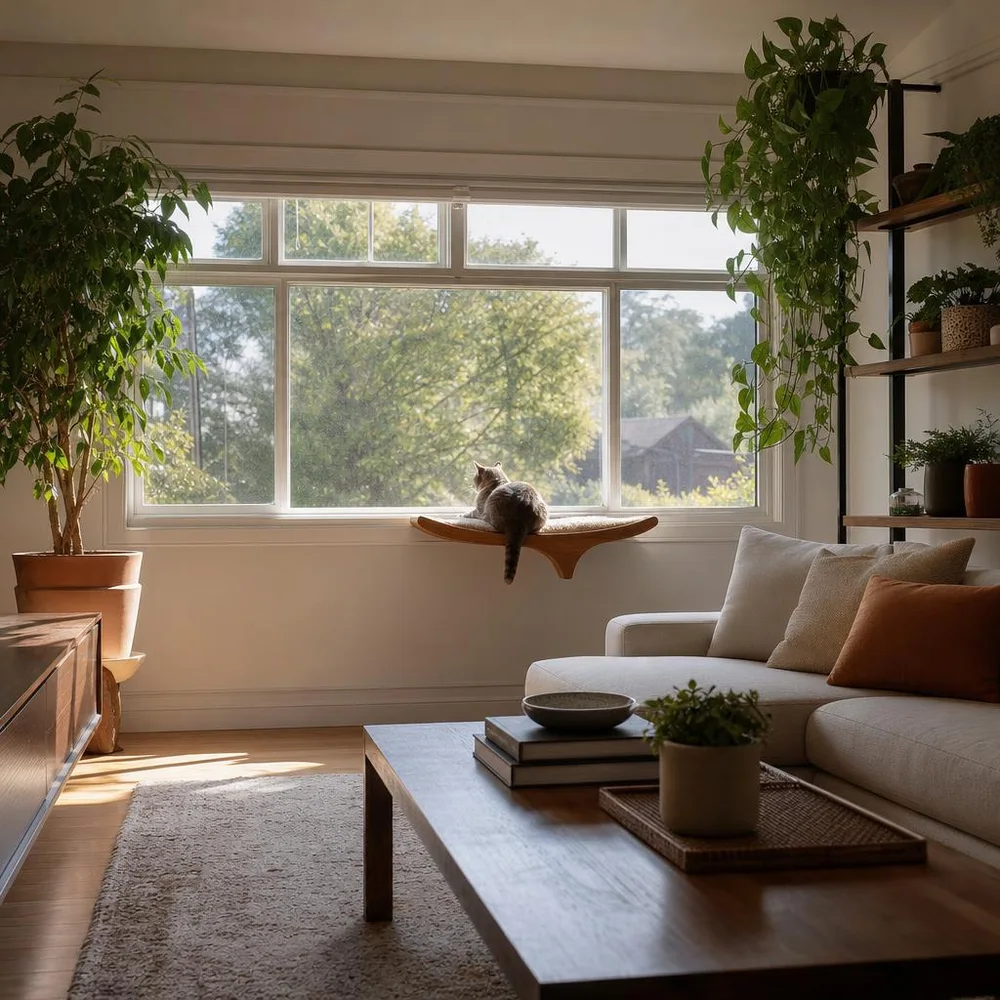
A Des Moines move with a cat works best when the apartment or house is evaluated as a living system, not just a furnished address. A monthlong stay can feel smooth on arrival and still become stressful if the written pet terms are vague, the windows do not secure properly, the furniture invites scratching, or you have not thought through how to keep veterinary care continuous during the move. For a calendar-month furnished stay, the question is not simply whether pets are allowed. It is whether the written agreement, room layout, and daily upkeep fit the way a cat actually lives.
Start with the written pet terms, not the floor plan
Before you get interested in the furniture style or the neighborhood feel, read the pet section of the agreement closely. In a monthly furnished stay, the pet language matters because it sets the actual boundary between a workable home and a constant source of friction. Look for whether cats are specifically allowed, whether there is a pet fee or deposit, whether there are restrictions on number, size, or behavior, and whether the provider expects any special cleaning at move-out. Written terms should also address what happens if a cat damages upholstery, blinds, screens, or flooring. If the terms are unclear, ask for them in writing before committing to the stay. That is especially important when a stay begins on a calendar date in one month and ends in another, because extensions and end dates should be handled in the actual agreement rather than assumed.
If you are comparing a monthly furnished rental to a hotel or short-stay option, remember that hotels usually have different pet rules, different room layouts, and far less space for a litter setup, carrier storage, and furniture protection. A hotel can be useful for a night or two during a transition, but it is not the same as a furnished monthly arrangement designed for everyday life.
Screens, windows, and the Des Moines weather question
A cat-safe stay in Des Moines depends partly on the building itself and partly on the season. Even when windows are attractive for natural light, they need to open in a way that does not create an escape route. Ask whether every operable window has a secure screen and whether screens are intact and firmly fitted. If the property has a balcony, porch, or ground-level patio, ask how access is controlled and whether the cat can reach it when a door opens. A quick visual check is not enough; some screens look complete but are loose at the edges or easy for a determined cat to push out.
Des Moines weather also changes how much you rely on windows for ventilation. In colder or stormy periods, a cat may spend more time indoors near warm spots, which can increase scratching, shedding, and window-watching behavior. If you want to understand local weather patterns as you plan, the National Weather Service can help you verify seasonal conditions and hazard updates for Iowa: National Weather Service. That is not a rental rule source, but it is useful when deciding whether a unit’s window security, HVAC, and entry layout are suitable for a pet staying indoors more often.
Furniture protection is part of the rent, not an afterthought
A furnished stay comes with another layer of responsibility: you are borrowing the provider’s furniture, not just occupying a room. That means it is worth evaluating the sofa fabric, chair legs, bed frame, rugs, and side tables before you move in. If a cat uses corners to scratch, check whether there are exposed woven surfaces, unfinished wood edges, or low upholstery seams that are likely to attract claws. Ask whether the provider expects you to use covers, mats, or scratch guards, and whether any of those items are acceptable to place on the existing furniture.
This is also the time to think about litter placement and traffic flow. A cat box tucked into a narrow hallway may seem hidden, but it can make cleaning harder and increase odor issues. A better setup often means a location that is easy to reach with cleaning supplies, far enough from food and water, and not likely to be disturbed when guests or service workers enter. If the monthly stay includes carpets, clarify what cleaning expectations exist for accidents or tracked litter. If hard floors are present, confirm whether there are any surface-care requirements. The more specific the agreement is, the easier it is to avoid disagreements at move-out.
Cleaning expectations should match daily cat life
A cat-friendly monthly stay should be judged by the routine it supports. Ask what “clean” means to the provider at departure and whether there are any particular expectations for lint removal, litter containment, odor control, or upholstery care. If the property has a vacuum, mop, or broom, verify that those tools are actually available for the duration of the stay. A monthly guest may need a different cleaning rhythm than a night-by-night traveler because cat hair, litter dust, and tracked debris build up over time.
Useful questions for this part of the setup include: will the provider expect professional cleaning, or only a standard tidy-out; are there trash collection instructions specific to pet waste; and is there a preferred way to report accidental damage promptly? None of these points should be guessed at. If the stay is arranged through search, use the contact process to ask for the pet terms in writing before you settle on dates. If you own a place and want to make it easier for cat owners to evaluate the fit, list your place with clear pet terms, furniture notes, and any screen or cleaning expectations you want guests to know in advance.
 search
Veterinarian continuity matters before the move, not after
A relocation with a cat is easier when veterinary continuity is settled before the first night in the new place. That means knowing where the cat’s regular records are, whether medications will need to be refilled during the stay, and how you will handle an unexpected visit if the cat seems unwell. You do not need to predict every medical issue. You do need a practical plan for records, phone numbers, and transportation. If the stay will be temporary while you evaluate a longer move, continuity matters even more, because a cat may be reacting to stress while you are still organizing your own move.
If you are moving from another part of Iowa or from outside the state, ask your current veterinarian for a copy of records and any guidance on travel timing. Then identify a nearby clinic in advance, not because you expect to need it, but because search time is harder when a pet is already stressed. If the provider’s location is near a busy road, limited parking area, or a building with multiple entrances, factor that into how you would carry a cat in and out safely. Veterinary planning is one of the clearest examples of why a furnished monthly stay is different from a hotel: the daily routines are longer, the storage needs are greater, and the pet’s comfort over weeks matters more than a single overnight.
A hypothetical household example
For example, a hypothetical household arrives in Des Moines for a two-month furnished stay with one indoor cat, a soft carrier, and a small set of furniture protectors. The family chooses a unit with secure window screens, laminate floors in the main living area, and a layout that allows the litter box to sit in a utility corner away from the kitchen. Before signing, they ask for written pet terms that address the deposit, what happens if a scratch appears on the sofa arm, and whether any extra cleaning is expected beyond routine vacuuming. They also bring a washable sofa cover, a scratching post, and a portable litter mat. Because they already have a current veterinary record packet and the phone number of a nearby clinic, they are not scrambling if the cat needs care during the stay. The household is not just renting space; it is setting up a workable daily environment.
Decision framework: when a Des Moines furnished stay fits a cat
Use this decision framework when comparing options.
- Choose the stay if the written pet terms are specific, the screens and windows are secure, and the furniture can reasonably be protected without upsetting the property’s condition.
- Choose the stay if the litter setup can be placed discreetly but accessibly, and if you can keep the cleaning routine realistic for a multiweek or monthly stay.
- Choose a different furnished property if the unit has fragile upholstery, poor window security, or a layout that forces the litter box into a high-traffic area.
- Choose a hotel or shorter stopover only if you need a brief bridge between moves and can manage the cat in a smaller, less permanent setup for a limited time.
- Choose a longer monthly arrangement if the cat settles better with stable furniture placement, repeated routines, and a predictable space for food, rest, and litter care.
Arrival and agreement checklist
Before you move in, use a short but practical checklist to avoid surprises.
- Confirm the exact start and end dates in writing, including any extension process if the month changes or plans shift.
- Get the pet terms in writing: allowed pets, fees or deposits, cleaning expectations, and any furniture or damage responsibilities.
- Inspect every window and screen, and ask how balconies, patios, or exterior doors are meant to stay secure.
- Map where the litter box, food, water, carrier, and scratching post will go before moving day.
- Document existing furniture condition with notes and photos so there is a shared reference at move-out.
- Pack a cleaning kit for litter, hair, and minor accidents so you are not relying on last-minute shopping.
- Save veterinary records and identify a nearby clinic before arrival, especially if the stay may last several weeks or longer.
Why Des Moines works best when the setup is explicit
Des Moines can be a good setting for a cat-friendly furnished stay when the arrangement is built around clarity. The city context matters less than the interior setup: secure windows, sensible furniture, defined cleaning expectations, and a veterinary plan. If you want a broader sense of how furnished monthly stays are framed in Iowa, the older state guide at Furnished monthly rentals in Iowa can help you compare the state-level context while you focus on the cat-specific details that make or break a move. The best outcome is not a perfect apartment. It is a written agreement and a room layout that match how your cat actually lives, so the stay feels stable from the first evening through the final day.
Make your next month feel more settled.
Related reading

Iowa City Night Shifts: Protect Your Daytime Sleep
Iowa City night-shift renters need quieter daytime sleep, practical commute timing, and the right monthly stay near UI Health Care schedules.

A relocation checklist for your temporary home
A steady, step-by-step plan for finding a place, organizing arrival and making the first few days in a new city less hectic.