Bend Monthly Stays for a Hybrid-Work Household
Plan a Bend monthly furnished base for two hybrid workers with call privacy, internet checks, kitchen use, and gear-friendly terms that fit a real month.
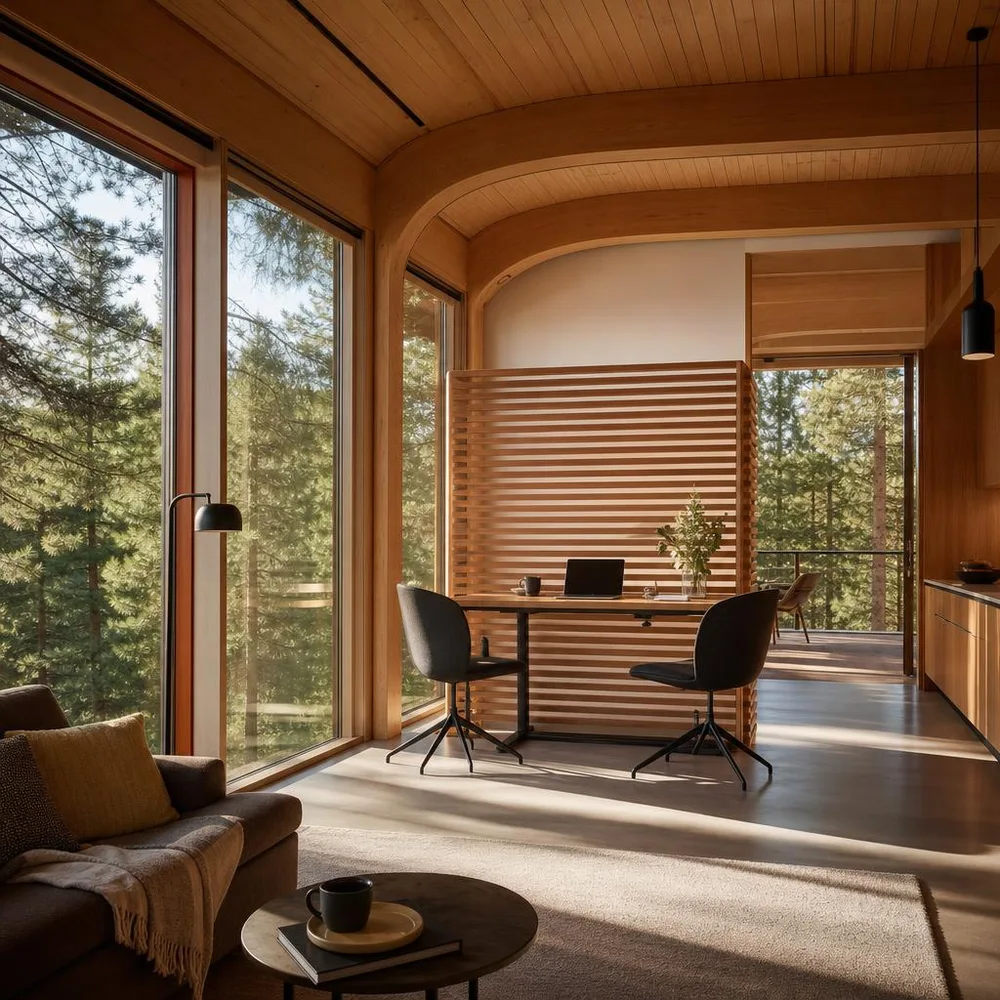
A Bend monthly stay works best when the apartment or house is treated less like a vacation stop and more like a temporary home base. For a hybrid-work household, the real questions are usually not about scenery. They are about whether both people can take calls without hearing each other, whether the internet performs during work hours, whether the kitchen makes weekday meals realistic, and whether the property allows the gear that makes Bend weekends possible: bikes, skis, boards, coolers, or other outdoor equipment. That is the difference between a pleasant month and a month spent negotiating around the space.
What Bend asks of a month-long base
Bend gives a monthly renter a particular mix of needs. A household may want easy access to downtown for errands and dinners, or a quieter residential setting closer to work blocks, trail access, or the east side. The right location depends on how the week is structured. If both adults work hybrid schedules, the home itself matters as much as the neighborhood. A place that looks great in photos can still fail if one person’s video calls overlap with the other’s meetings, or if the dining table doubles as the only workspace and kitchen prep area.
This is where is useful: it helps readers search for monthly furnished stays and contact property providers for calendar-month or longer arrangements, rather than short-stay nightly booking. February can be a full month, but exact start and end dates still matter. A written extension, and the actual terms of the agreement, should be confirmed before anyone commits to a plan.
 is useful: it helps readers search for monthly furnished stays and contact property providers for calendar-month or longer arrangements, rather than short-stay nightly booking. February can be a full month, but exact start and end dates still matter. A written extension, and the actual terms of the agreement, should be confirmed before anyone commits to a plan.
Separate work privacy from shared living space
For two hybrid workers, call privacy is the first design problem. One open-plan loft can be fine for a couple that keeps identical schedules, but it becomes difficult when meetings overlap. The better question is not simply, “Does it have two desks?” It is whether the layout supports simultaneous work without turning the whole residence into a conference room.
Useful layout features to ask about include:
- A second enclosed room or den that can function as a call space, even if it is not a formal office.
- Doors or acoustic separation between the sleeping area and work area, especially if meetings begin early or end late.
- A table or desk setup that can be left in place between work sessions rather than packed away daily.
- Window coverings and lighting that make video calls practical at different times of day.
- A floor plan that lets one person join a call while the other uses the kitchen without causing constant background noise.
If the property has only one strong work zone, ask whether the provider allows a movable screen, a folding table, or a second chair to support temporary office separation. The issue is not style; it is function. One person may need a quiet place for client calls while the other is writing, reviewing documents, or working with headphones. The most comfortable month-long stays are the ones that make shared space flexible.
Test the internet like a worker, not a browser
Internet claims need to be treated carefully. A listing may mention Wi-Fi, but a hybrid household needs to know more than that. The important question is whether the connection can support live meetings, cloud work, file transfers, and two people online at the same time. Do not rely on a generic promise or a single speed statement without context. Ask what connection type is used, whether the provider can share a current test, and whether the work area has a strong signal at desk height, not just near the router.
A practical internet check can include these steps:
- Ask whether the property uses fiber, cable, or another connection type, and whether the router is placed near the intended work area.
- Request a current speed test screenshot from the provider, then ask what time of day it was taken and whether multiple devices were active.
- Clarify whether the monthly rate includes internet already set up, or whether you would need to activate service yourself.
- Ask if there are dead zones in the home and whether Ethernet access is available for one or both desks.
- Confirm whether the connection is shared with another unit, which can matter in multi-unit buildings.
If both workers depend on strong internet, a backup plan is worth discussing before arrival. That could mean a mobile hotspot, a nearby coworking option, or simply choosing a home where the provider can explain the network clearly. Short-term convenience is not the point. Reliable weekday work is.
Kitchen use changes the monthly budget and the weekly rhythm
A Bend furnished rental for a month should make meal preparation realistic, not merely possible. A kitchenette may be enough for a traveler, but a hybrid household often needs storage, prep space, and enough cookware to avoid constant takeout. Bend has enough dining options to make eating out tempting, but monthly stays become easier when breakfast, lunch, and simple dinners can be handled at home on busy workdays.
Before agreeing to a place, ask about the actual kitchen setup. Does it have a real refrigerator with freezer space, not just a compact unit? Is there an oven, or only a cooktop and microwave? Are there enough pans, cutting tools, storage containers, and dishware for two adults using the kitchen daily? A month-long stay can become frustrating when there is nowhere to cool leftovers, prep lunches, or store grocery staples.
Meal planning also interacts with the neighborhood. A home with easy access to groceries can reduce daily friction more than a scenic address that requires a longer errand run. For a household balancing work calls, recreation, and meal prep, the ideal setup is often a place where breakfast and simple dinners are easy, even if occasional restaurant meals remain part of the routine.
Gear, hobbies, and house rules
Bend attracts people who carry more than luggage. Bikes, skis, paddle gear, climbing equipment, coolers, and muddy boots all need somewhere to live. That makes recreational-equipment permissions a real issue, not a side note. A furnished stay should be asked about storage and use terms before arrival. The goal is to avoid assumptions about where equipment can go, whether it can be rinsed off outside, and whether indoor storage is permitted.
Questions to raise about gear and house rules:
- Is there secure storage for bikes or other valuable equipment, and if so, where is it located?
- Are wet items, sandy items, or muddy outdoor gear allowed inside, and if yes, where should they be kept?
- Can guests use a garage, mudroom, patio, or entry space for equipment organization?
- Are there rules about carrying gear through shared hallways, elevators, or common spaces?
- Does the property allow temporary racks, hooks, or folding storage solutions if approved in writing?
These details matter because monthly stays usually involve a repeat pattern: work, errands, recreation, and recovery. If the household plans to spend weekends outdoors, the right rental should support cleanup and storage without creating tension with neighbors or the property provider. A clear agreement about gear protects both sides.
Hypothetical household example: two schedules, one base
For example, a hypothetical couple arrives in Bend for a six-week calendar-month-plus stay. One person works East Coast hours and joins calls early in the morning. The other works a standard Pacific schedule and begins later, but has several mid-afternoon meetings. They choose a furnished home with a small den, a table that can stay set up for work, and a kitchen with enough counter space to prep lunches in the morning. They also ask the provider to confirm that bikes may be stored in the garage and that the Wi-Fi service is already active when they arrive.
In that setup, the household’s success depends on a few quiet details: the den becomes a call room, the kitchen reduces weekday meal stress, and the storage plan keeps outdoor gear from taking over the living room. If any one of those pieces fails, the month becomes harder than expected. If all of them work, the stay feels steady and functional instead of improvised.
A decision framework for choosing the right Bend stay
When comparing options, use a simple decision framework rather than letting the prettiest photo decide. Ask whether the property is good enough on all four core fronts, because one weak area can disrupt the whole month.
- Work: Can two people take calls, concentrate, and keep devices charged without constant reconfiguration?
- Connectivity: Has the internet been described in enough detail to judge stability for daytime work?
- Daily living: Can the household cook, store food, do laundry, and rest without feeling cramped?
- Lifestyle fit: Are the neighborhood and house rules compatible with the gear, quiet hours, and routines the household expects?
A strong Bend monthly stay usually meets all four needs, even if it is not the most glamorous option. A beautiful mountain view does not replace a second work surface. A stylish interior does not solve a kitchen with no prep room. And a convenient location does not compensate for unclear storage rules if the household brings bulky equipment. The point is to match the property to the month that will actually be lived there.
Arrival and agreement checklist
Before move-in, confirm the practical terms in writing and keep them together with the dates of the stay. This is especially important for calendar-month arrangements, written extensions, and any condition that affects work or storage.
- Confirm the exact start date, end date, and whether any extension would require a new written agreement.
- Verify who provides internet, when it will be active, and whether any setup step is still pending.
- Walk through the work layout: desks, chairs, outlets, lighting, and the room each person will use for calls.
- Check kitchen equipment, refrigerator space, pantry storage, and any limitations on cooking or cleanup.
- Ask where bikes and outdoor gear may be stored, and whether any area is off-limits.
- Review parking, entry instructions, trash disposal, and laundry access so weekday routines are not improvised.
- Clarify guest rules, quiet expectations, and any limits on rearranging furniture or adding temporary work items.
- Record the provider’s preferred contact method in case something needs to be resolved after arrival.
The best month-long rental in Bend is not necessarily the most expensive or the most scenic. It is the one that supports work, meal preparation, and recreation without forcing daily compromises. If you are still comparing places, the search page is the practical starting point for finding furnished monthly stays and contacting property providers, while list your place is the relevant route for owners who want to offer a furnished home for calendar-month or longer occupancy. If you want a broader Oregon context before narrowing to Bend, the older guide Furnished Monthly Rentals in Oregon can help frame how monthly stays differ from short-stay lodging across the state.
Make your next month feel more settled.
Related reading

A Portland Month With a Dog: Build a Real Daily Routine
Plan a Portland month with a dog by building a walk routine around leash rules, off-leash areas, and daily gear checks.

A relocation checklist for your temporary home
A steady, step-by-step plan for finding a place, organizing arrival and making the first few days in a new city less hectic.